The brief
Made with Love is a 7-week project created for a senior level User Experience design class and has no affiliation with IGA. The brief for the project was to find and research a business problem, and to design an intervention that would alleviate customer pain points and provide value to the business.
My contributions
I was involved throughout the research process and content strategy. When it came to execution, I led the business strategy and was responsible for designing the early iterations of the UI design with two teammates, and for writing the script and creating the videos.
The problem
“To be winners of the future, we also need to have a digital relationship. It’s not one or the other, and in our view, it’s not optional.” - Jim Walz (VP, IGA Brand Development)
The independent grocer alliance (IGA) has been around for nearly a century, bringing local grocery stores under a singular brand name to provide a tailored and local shopping experience to their communities. With a focus on their brick and mortar stores, IGA is falling behind in digital sales in a growing competitive market.
The challenge
How might we extend IGA’s services to the digital space and how might we help IGA develop a stronger relationship by focusing on serving a specific group of people?
1 / 3 - Identifying an opportunity for design
To identify where we can intervene, we sent out a survey to understand consumers’ grocery shopping behaviors. We noticed a lack of responses from seniors aged 65+ which prompted us to look further into this customer segment.
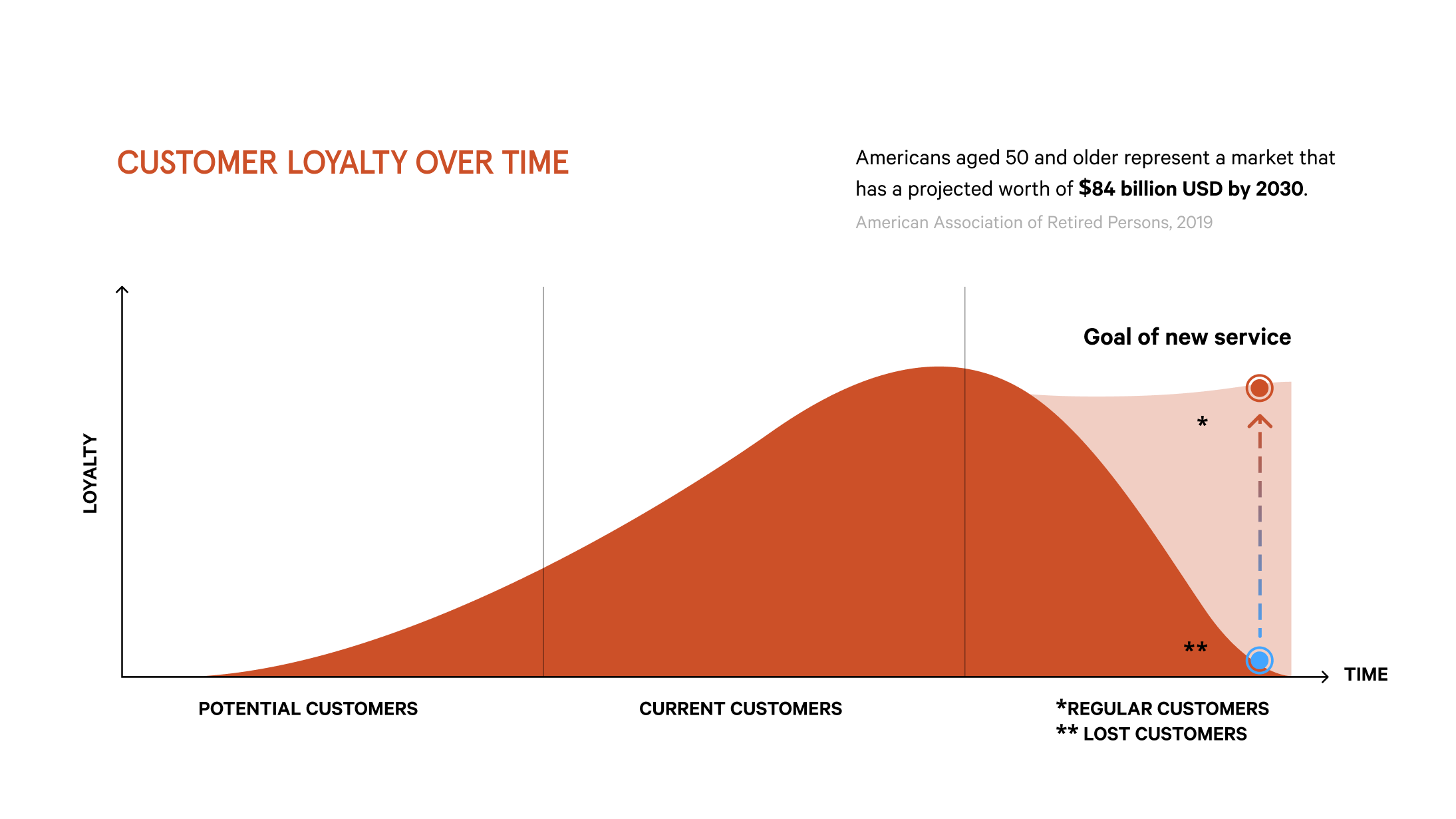
We also mapped out where customers would abandon IGA, and found that they would do so when they can no longer cook or shop for themselves. This could be a significant loss to IGA as the aging population is estimated to have a spending power of ~84 billion USD by 2030.
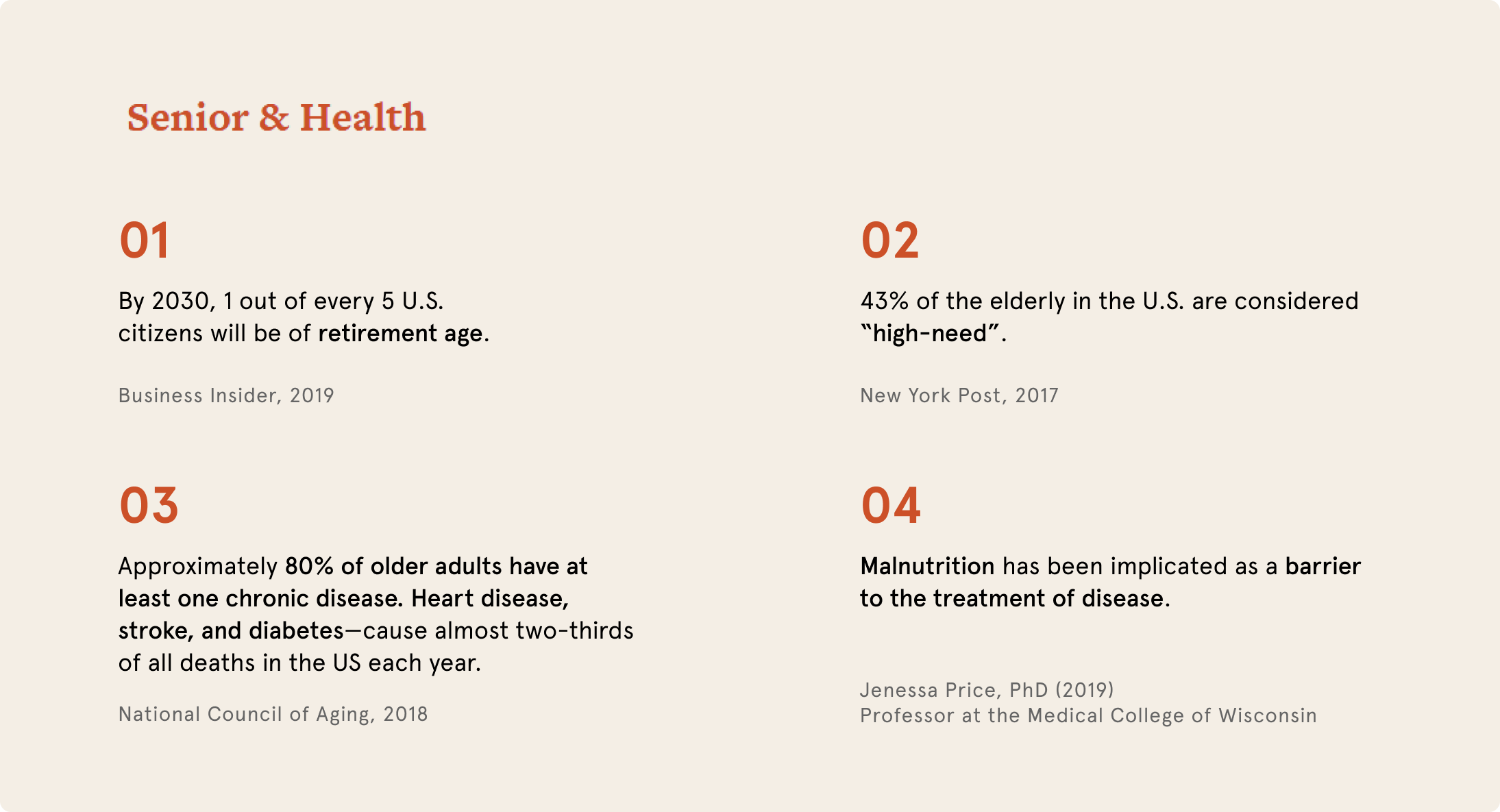
Our secondary research on seniors surfaced the following key insights:
We focused on IGA’s operations in the United States as it is one of two developed countries in the world without a social insurance program for long-term care (Courier Newsroom, 2020).
As the elderly population continues to grow, they will need more support in their day to day activities. This led us to focus on designing a solution for the aging elderly population (future seniors) and led us to ask: How might we close the gap between senior needs and the food sector?
2 / 3 - Design sprint
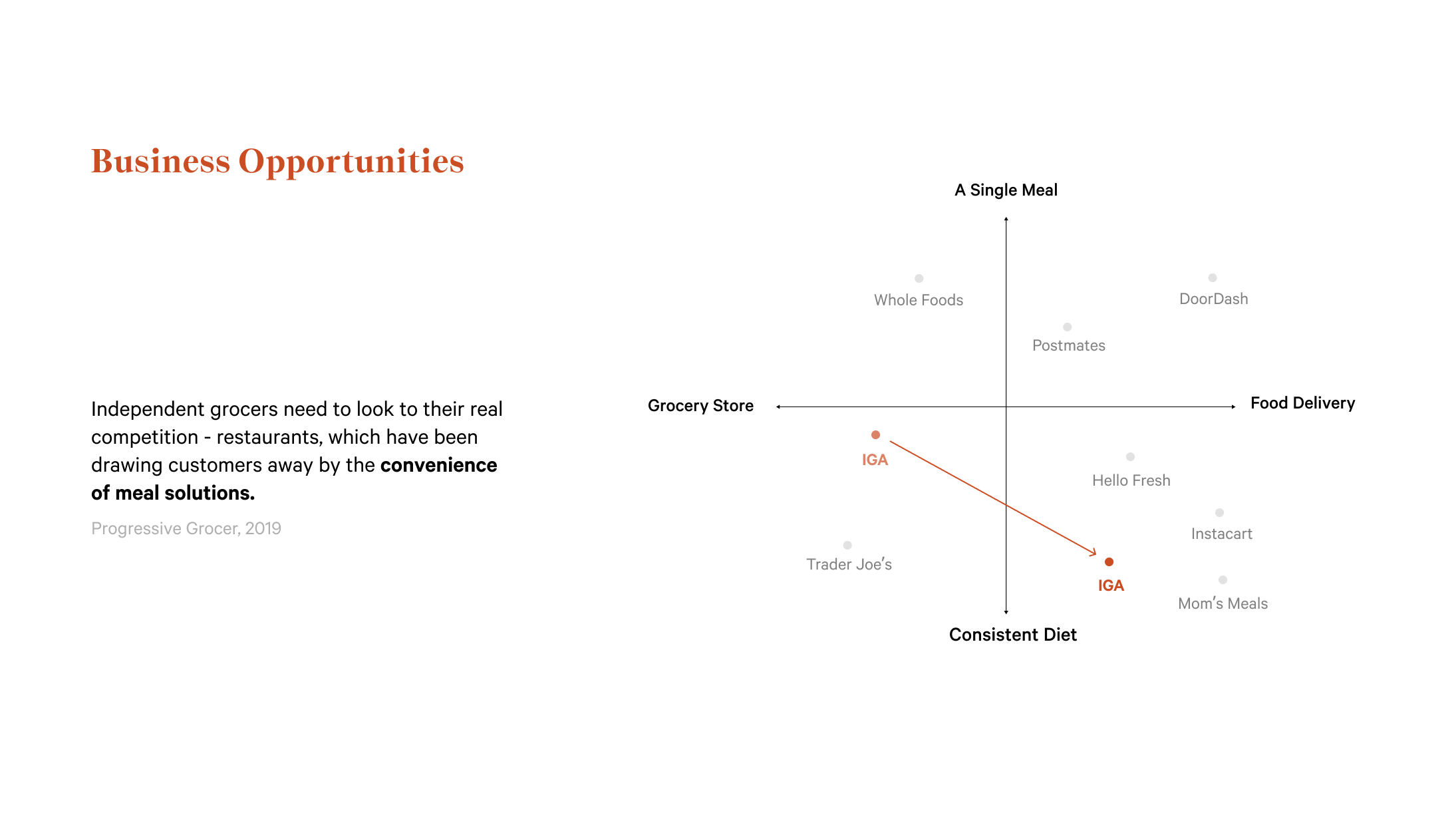
To explore how might we close the gap between senior needs and the food sector, I co-led a 5 day virtual design sprint where we discovered an increase in seniors using delivery services due to its convenience. We saw an opportunity to positively impact elderly customers’ quality of life while also building market share for IGA.
3 / 3 - Making inferences to create a persona/journey map
We looked at current trends to make inferences on what seniors’ needs will be in the future and found 4 key characteristics of future seniors.
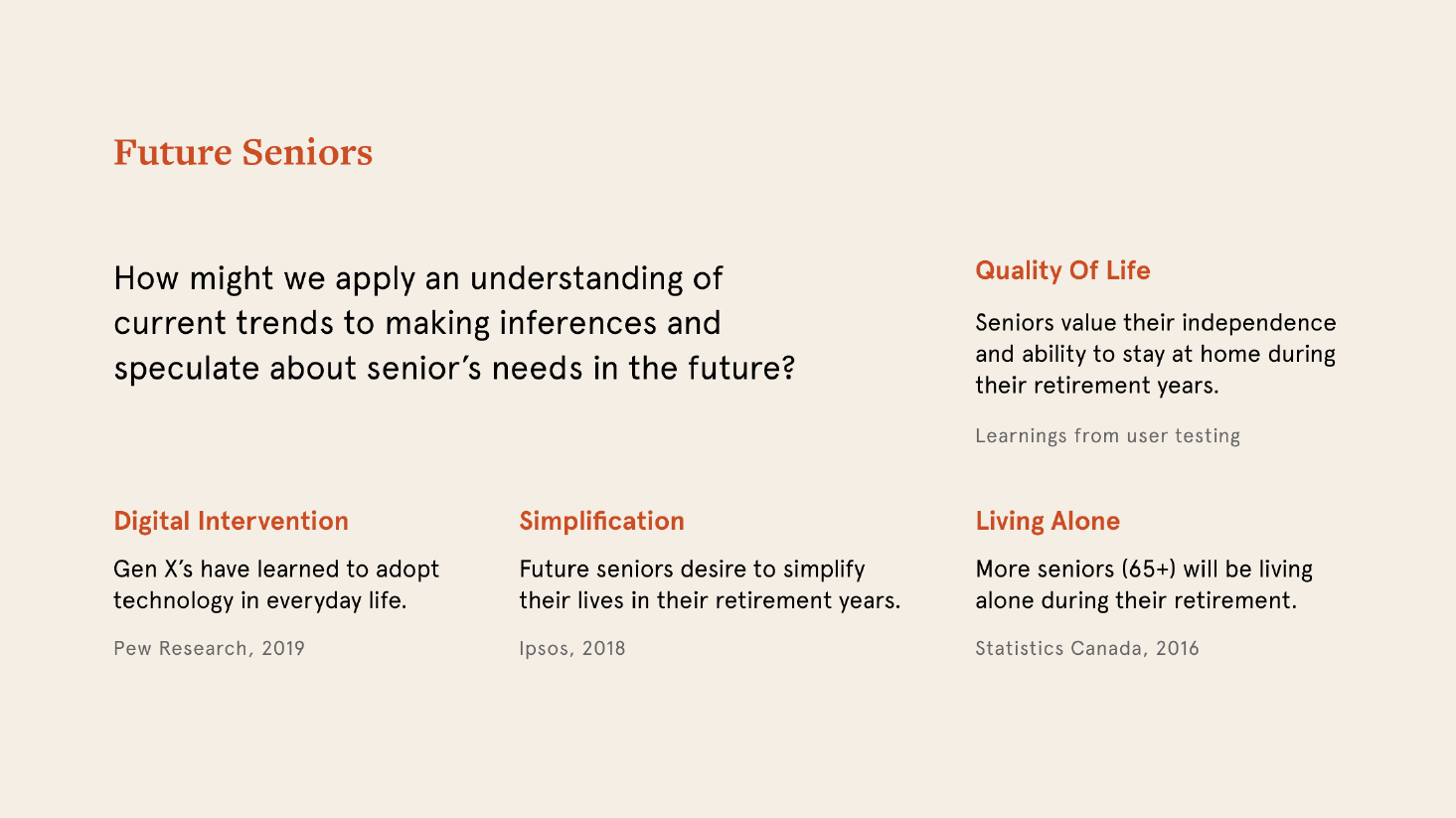
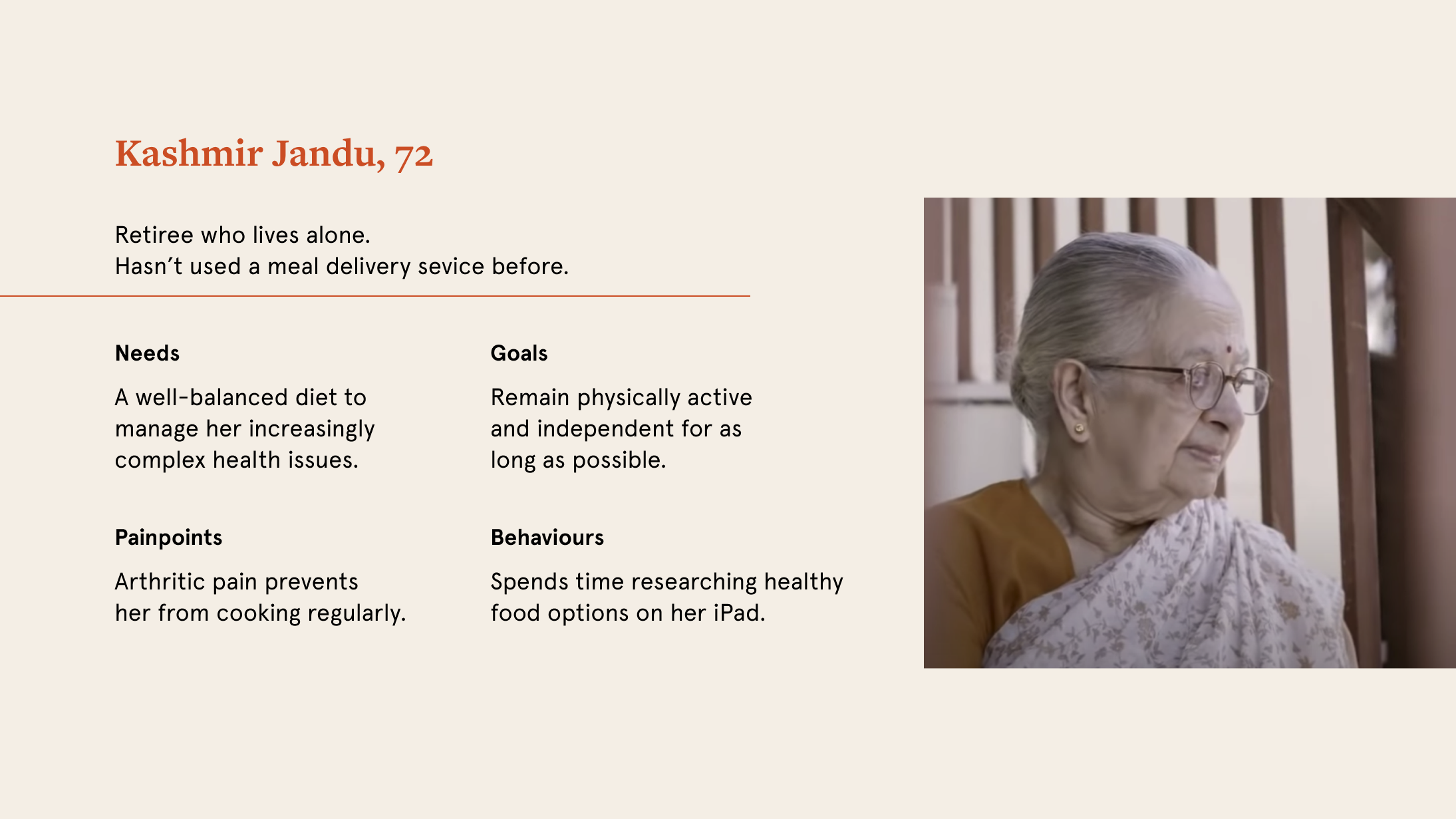
These findings helped us develop our persona, Kasmir, a single retiree that was recently diagnosed with heart disease. She struggles to find healthy food options that are suitable for her needs and her arthritic pain prevents her from cooking.
Our persona informed our user journey map and service blueprint of ordering from a meal delivery service, where we identified two key areas to address in our intervention. This also led us to change the questions we asked ourselves.
Key areas to address:
01
Difficulty in finding food suitable for one’s unique health needs
02
Lack of personalized options in delivery services
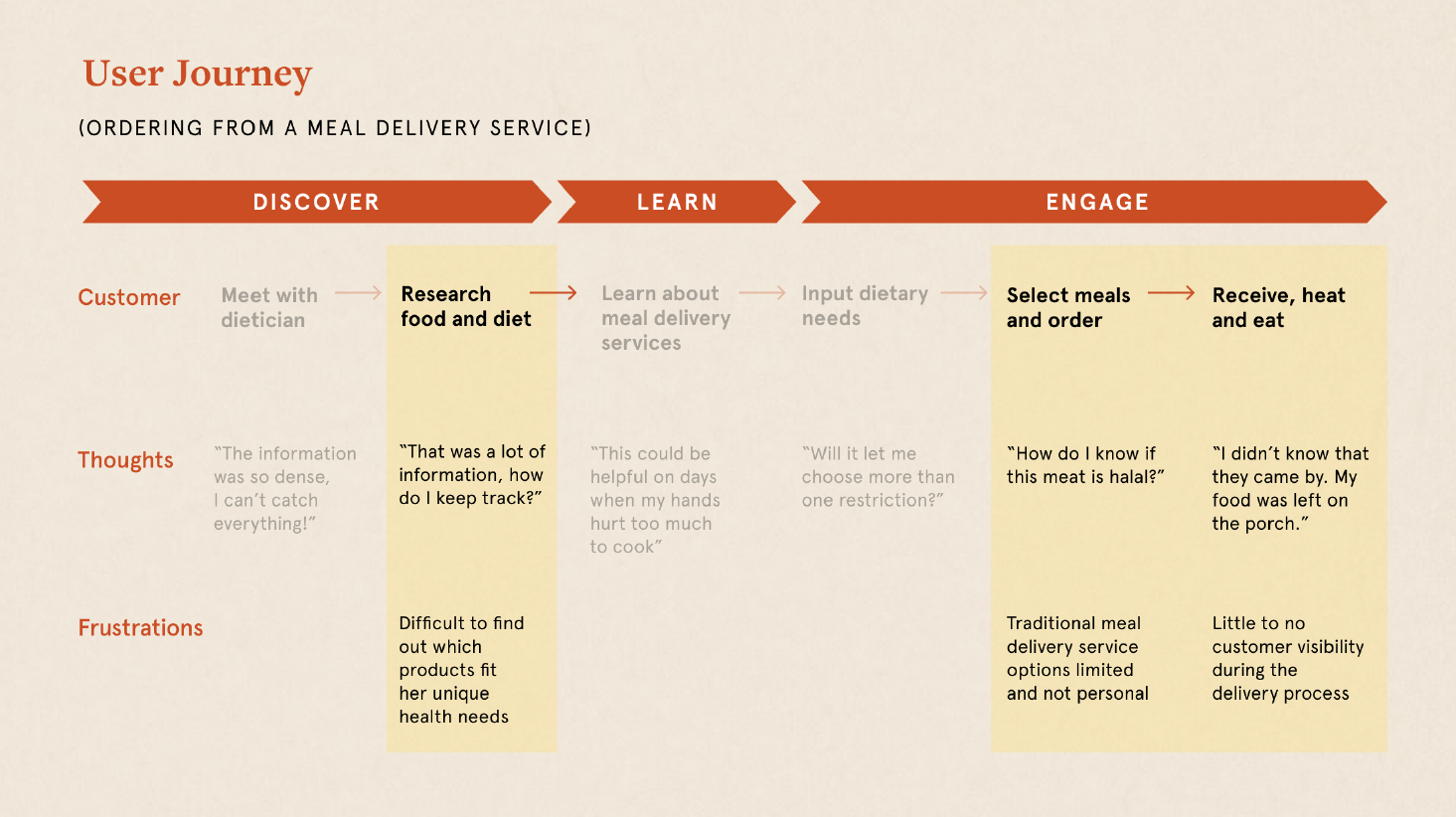
With a lot of information, it can become frustrating for seniors to keep track of what they can and cannot eat. So we asked ourselves, how might we make meal delivery feel personalized for our senior audience in order to revive the joy of eating a home-cooked meal?
We also learned through our user tests that seniors value their independence. So we asked ourselves, how might we make meal options more accessible for seniors in order to help them regain a sense of independence?
Key design decisions:
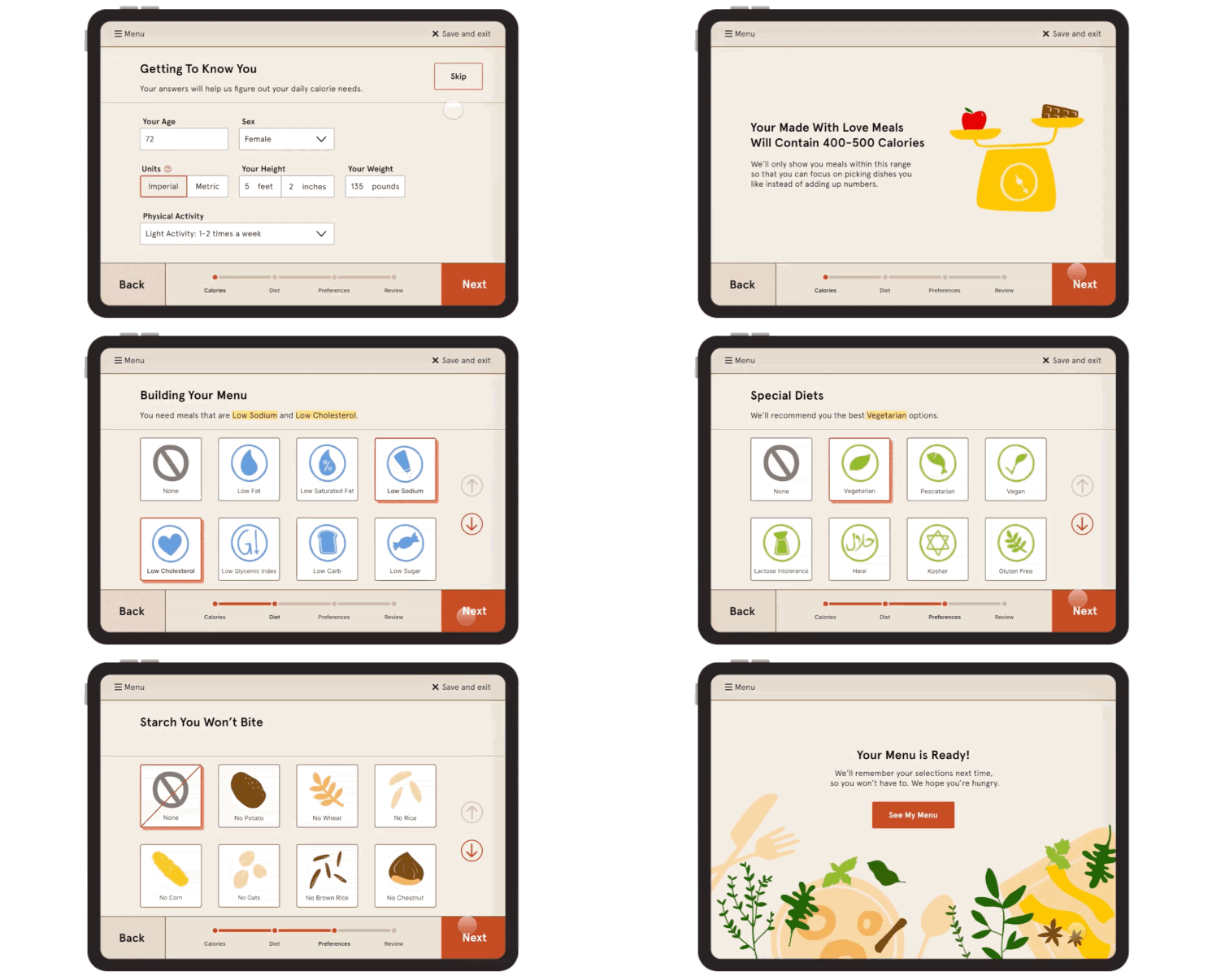
Onboarding:
An optional step is included in the onboarding where personal questions are asked to determine a calorie range for the seniors’ recommended meals.
Seniors can tailor the menu to suit their health needs by specifying the types of diets they should follow, food preferences, and allergies, all while keeping their health conditions confidential.
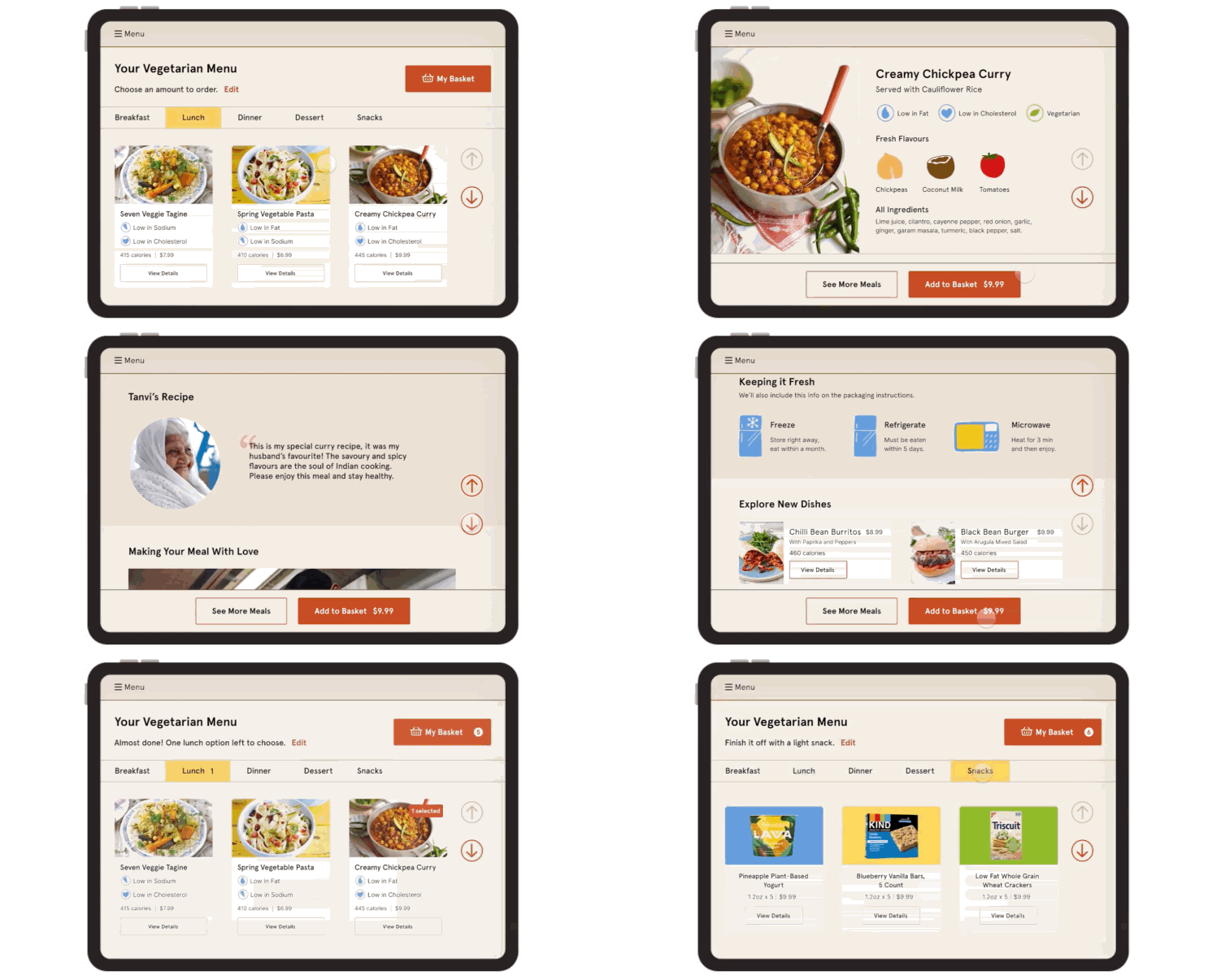
Ordering:
Made with Love offers meals for breakfast, lunch, and dinner, as well as the option to order a dessert or snack.
To ensure seniors know what they are getting, Made with Love offers the ability to view a meal details’, where seniors can see the ingredient list, nutritional benefits, as well as how the meal was made.
Reordering
The app sends a friendly and personalized reminder for the senior to reorder their meals. The senior can quickly order by editing one of their past meals. Their recommended meals will be based on their ordering habits.
Art direction & moments of joy
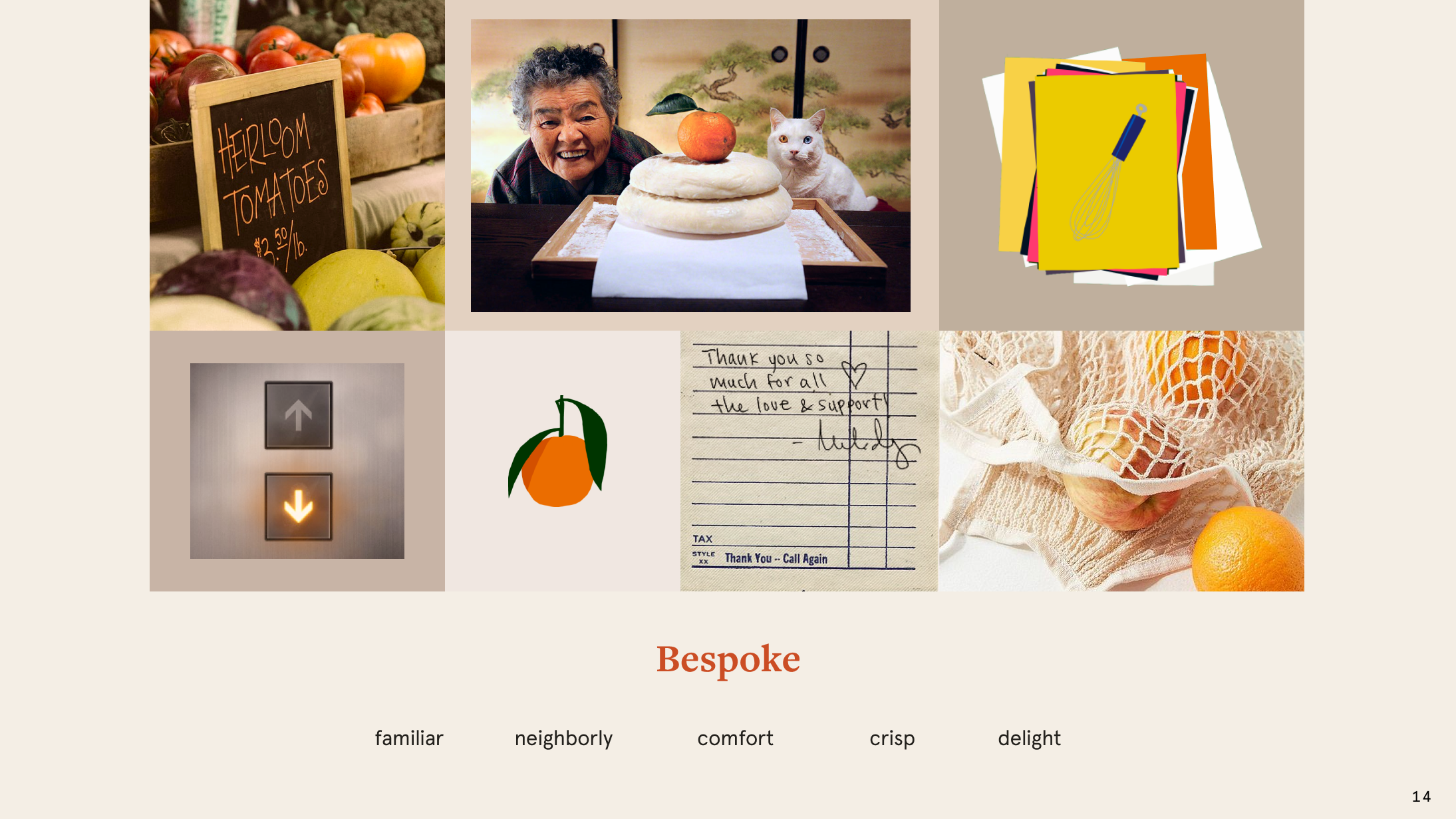
The art direction references memorable elements from grocery stores and the real world that seniors may be familiar with. As the UI is focused on being simple and functional, we introduced a vibrant color palette for the illustrations to bring out the joyfulness. Micro-animations placed throughout the app for a feeling of accomplishment and reward.
Key accessibility considerations
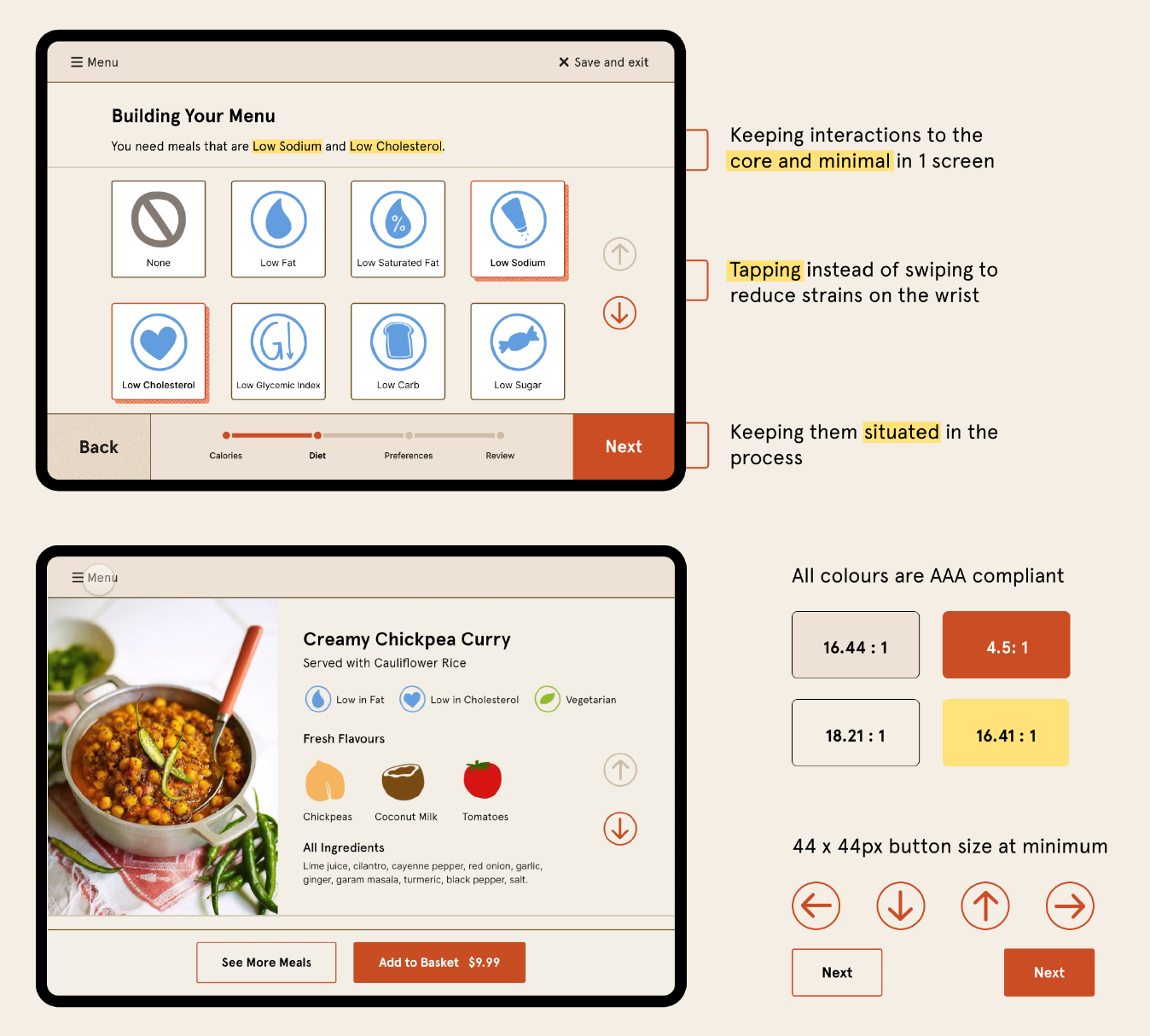
Made with Love was designed for tablets as it is the most used device for seniors. For best practices around accessibility for seniors, we focused on keeping the interactions to a minimum to reduce information overload. To reduce strains on the wrist, arrows were added as an option to assist with scrolling. Lastly, a progress bar is used to keep the seniors situated in the process.
Learnings & takeaways
Throughout the project, I was able to step outside of my comfort zone and explore different tools, design methodologies, and frameworks. As a team, we incorporated mini critique sessions to present, discuss, and select ideas to move forward with. These sessions taught me to listen to my teammates so they feel heard, and also to build onto and combine ideas. It allowed us to move the project to a better direction as we were able to explore different ideas and come to an agreement. It also taught me to not take rejection to heart, as this is a process of creating a better design.


